Does Jump Rope Build Muscle? 9 Powerful Truths You Must Know

IIf you’ve ever wondered, Does jump rope build muscle?, you’re not alone. Jump rope is often seen as a simple cardio workout, something boxers use or kids enjoy on the playground. But here’s the surprising truth — jump rope can do far more than burn calories. It can help build muscle under the right conditions.
But how effective is it really? What muscles does jump roping work? And more importantly, how long should I jump rope to build muscle?
Let’s break it all down in a clear, practical, and science-backed way.
Introduction to Jump Rope Training and Muscle Development
Jump rope training has exploded in popularity over the last decade. It’s cheap, portable, and incredibly efficient. In just 10–20 minutes, you can get a powerful workout that challenges your heart, lungs, and muscles.
But muscle growth — also called hypertrophy — requires specific conditions. Not every workout builds size. Some build endurance. Others build strength.
So where does jump rope fall?
To answer that, we first need to understand how muscles actually grow.
The Science Behind Muscle Growth (Hypertrophy Explained)
Muscle growth doesn’t happen by accident. It happens when your muscles face resistance that forces them to adapt.
Mechanical Tension and Resistance
When you lift weights or perform resistance exercises, your muscles experience tension. This tension causes tiny tears in muscle fibers. When your body repairs those fibers, they grow back stronger and sometimes larger.
Jump rope creates repeated tension in specific muscles — especially the calves and shoulders.
Progressive Overload Principle
Muscles grow when you gradually increase the challenge. This is called progressive overload.
You can apply this to jump rope by:
- Increasing duration
- Increasing speed
- Adding a weighted rope
- Performing advanced moves like double unders
Without progressive overload, muscle growth will stall.
Role of Nutrition and Recovery

No workout builds muscle without proper protein intake and rest. Your muscles need fuel to repair and grow. If you’re under-eating or overtraining, you won’t see gains — even if you jump rope daily.
Does Jump Rope Build Muscle?
Let’s answer the big question directly:
Yes, jump rope can build muscle — but mainly in the lower body and primarily in terms of endurance and definition rather than massive size.
It’s not a replacement for heavy weightlifting if your goal is large muscle gains. However, it can absolutely:
- Strengthen calf muscles
- Improve muscle tone
- Increase lower body endurance
- Enhance muscular definition
Can Cardio Stimulate Muscle Growth?
Most people think cardio kills muscle. That’s not entirely true.
Explosive, high-intensity cardio — like jump rope intervals — can stimulate muscle fibers, especially fast-twitch fibers when done aggressively.
Muscle Endurance vs Muscle Size
Jump rope primarily builds muscular endurance. This means:
- Better stamina
- Leaner appearance
- Improved muscle control
If you’re looking for bodybuilder-level growth, you’ll need resistance training. But for athletic, lean muscle? Jump rope works surprisingly well.
What Muscles Does Jump Roping Work?
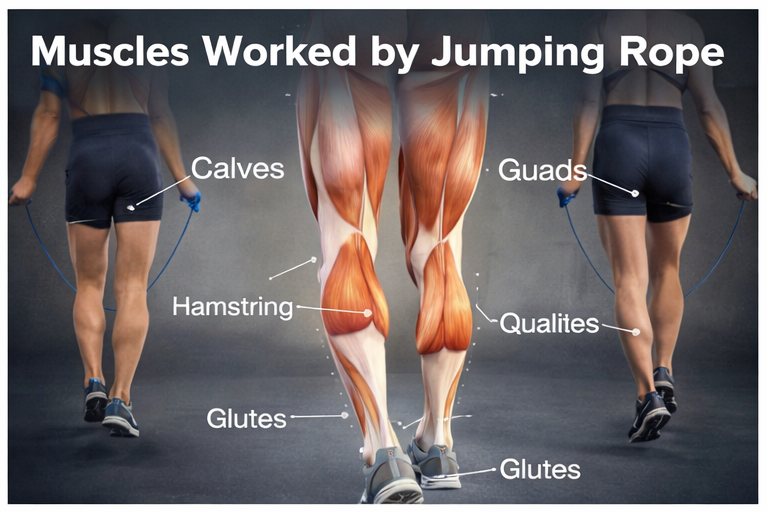
One of the most common questions is: what muscles does jump roping work?
The answer: more than you might think.
Lower Body Muscles
Jump rope heavily targets:
- Calves (Gastrocnemius & Soleus) – These are the primary movers.
- Quadriceps – Help stabilize your knees.
- Hamstrings – Assist in knee flexion.
- Glutes – Stabilize your hips and improve balance.
Your calves receive the most direct stimulus. That’s why many people notice calf growth first.
Core Muscles and Stabilizers
Your core works constantly to keep you upright and balanced. This includes:
- Abdominals
- Obliques
- Lower back muscles
A tight core improves posture and enhances muscle engagement.
Upper Body Muscles
While less involved than the lower body, jump rope still activates:
- Shoulders (especially anterior deltoids)
- Forearms
- Biceps (lightly)
- Triceps (lightly)
Using a weighted rope increases upper-body engagement dramatically.
How Long Should I Jump Rope to Build Muscle?
Now to the practical question: how long should I jump rope to build muscle?
Beginner Guidelines
If you’re new, start with:
- 10–15 minutes per session
- 3–4 times per week
Focus on good form and consistent rhythm.
Intermediate & Advanced Training Duration
To stimulate noticeable muscle adaptation:
- 20–30 minutes per session
- Include intervals
- Add weighted rope sessions
Frequency Per Week
For muscle-focused results:
- 4–5 days per week
- Combine with bodyweight exercises like squats and push-ups
Consistency matters more than marathon sessions.
How to Jump Rope for Maximum Muscle Activation
If your goal is muscle, technique matters.
Weighted Jump Rope Training
Weighted ropes increase resistance, making your shoulders, arms, and forearms work harder.
Interval Training (HIIT)
Try:
- 30 seconds fast
- 30 seconds slow
- Repeat for 15–20 minutes
This stimulates more muscle fibers.
Double Unders and Advanced Variations
These require explosive power, which increases muscle recruitment.
Jump Rope vs Weight Training for Muscle Building
Let’s be clear:
- Jump rope = Lean muscle & endurance
- Weight training = Significant hypertrophy
For best results, combine both.
According to the American Council on Exercise (ACE), resistance training remains the gold standard for muscle growth (source: https://www.acefitness.org).
Common Mistakes That Prevent Muscle Growth
- Jumping too long without intensity
- Not eating enough protein
- Ignoring rest days
- Poor form
- No progressive overload
Fix these, and results improve quickly.
Nutrition Tips to Support Jump Rope Muscle Gains
- Eat 0.7–1g protein per pound of bodyweight
- Stay hydrated
- Include healthy carbs for energy
- Prioritize sleep (7–9 hours)
Muscle growth happens outside the workout.
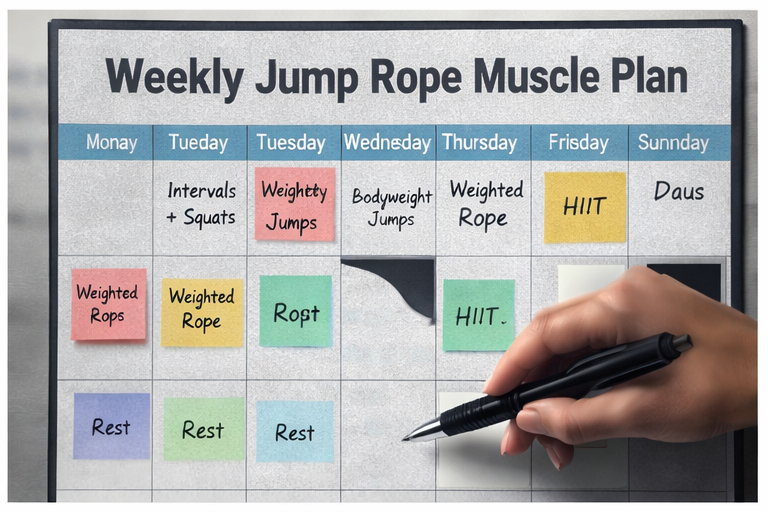
Sample Weekly Jump Rope Muscle Plan
| Day | Workout |
| Monday | 20 min intervals + bodyweight squats |
| Tuesday | 15 min steady jump |
| Wednesday | Rest |
| Thursday | 25 min weighted rope |
| Friday | 20 min HIIT |
| Saturday | Light recovery jump |
| Sunday | Rest |
Benefits Beyond Muscle Growth
Jump rope also improves:
- Cardiovascular health
- Coordination
- Agility
- Bone density
- Fat loss
It’s one of the most efficient full-body tools available.
Frequently Asked Questions (FAQs)
1. Does jump rope build muscle in the legs?
Yes, especially in the calves and lower legs.
2. How long should I jump rope to build muscle effectively?
20–30 minutes with intervals, 4–5 times weekly.
3. What muscles does jump roping work the most?
Primarily calves, core, and shoulders.
4. Can jump rope replace leg day?
No, but it enhances leg endurance and tone.
5. Will jump rope make my calves bigger?
Yes, especially with consistent, progressive training.
6. Is jump rope good for beginners?
Absolutely — start slow and build gradually.
Conclusion: Is Jump Rope Enough to Build Muscle?
So, Does jump rope build muscle?
Yes — but mostly lean muscle and endurance-based growth. It’s fantastic for calves, improves coordination, and boosts overall athleticism.
If your goal is a lean, athletic body, jump rope is a powerful tool. If you want maximum muscle size, combine it with strength training.
Either way, it’s one of the most effective, affordable workouts you can add to your routine.