Jump Rope Muscles Worked: What Jumping Rope Targets
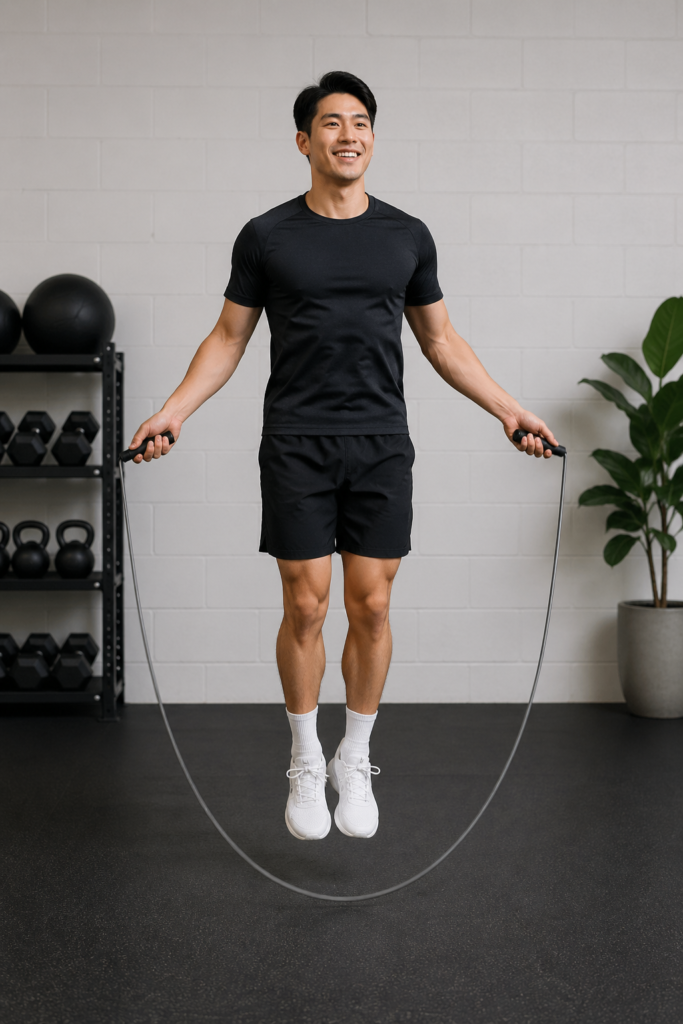
If you’re looking for an incredibly efficient, full-body workout, look no further than the humble jump rope. It is inexpensive, portable, and packs a massive calorie-burning punch. But if you are new to the exercise, you are likely wondering exactly what parts of the body does jump rope work? People often mistake skipping for a simple cardiovascular routine, frequently asking, “what does jump rope target?” or “what does jump roping target?”
The truth is, the jump rope muscles worked span from your lower calves all the way up to your shoulders. Because it recruits multiple joints and various muscle groups simultaneously, many fitness experts get asked: is jumping rope a compound exercise? Absolutely. Let’s dive deeply into the specific jump rope muscles used, explore the mechanics behind the movement, and answer the ultimate fitness question: does jumping rope build muscle?
What Muscles Does Jump Rope Work? A Full-Body Breakdown
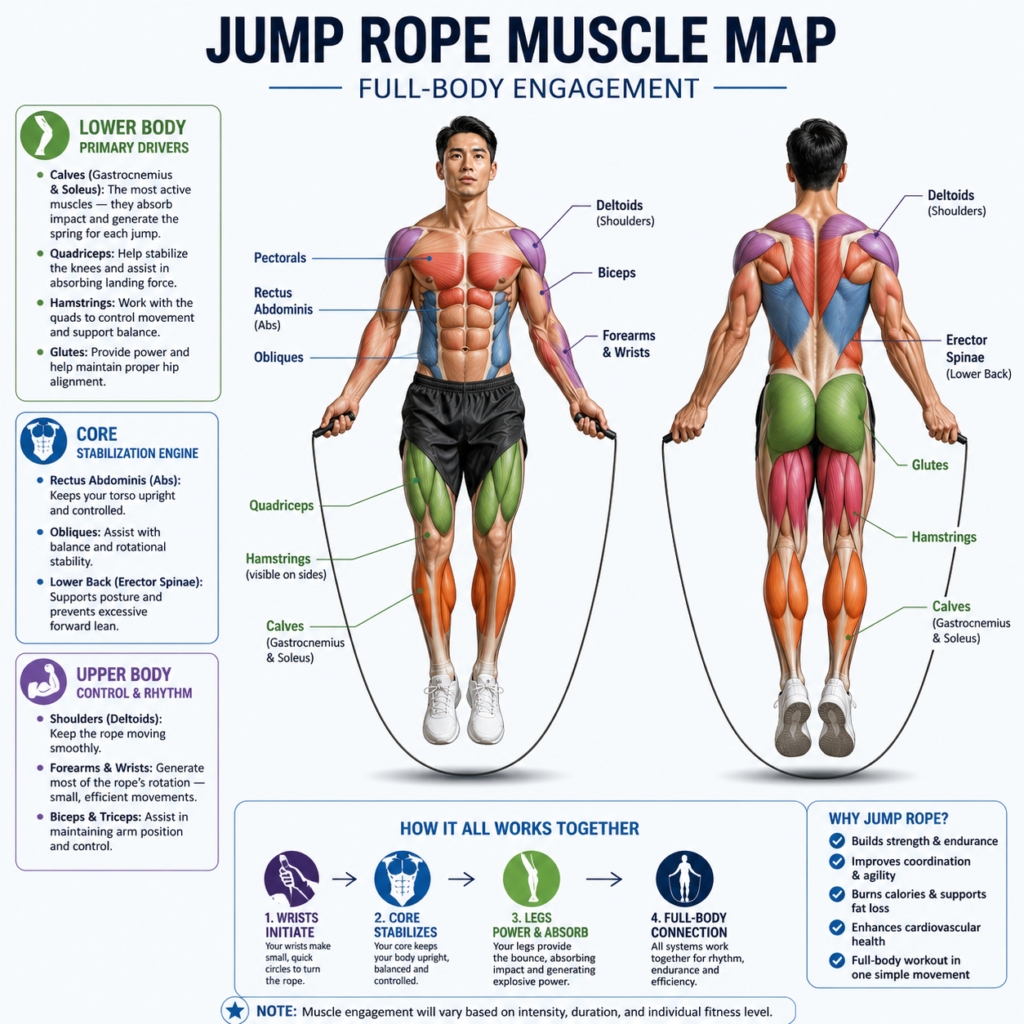
When gym-goers ask, “what muscles does skipping work?” (or search for the common query, “what muscles do skipping work?”), they are often surprised by the comprehensive answer. The skipping rope muscles used are extensive, making it a highly efficient use of your workout time. Here is a detailed breakdown of the specific muscles that jump roping works.
The Lower Body Foundation: Calves, Quads, and Hamstrings
The primary power generators in your jumps are, unsurprisingly, your legs. So, what does jump roping workout in the lower half of your body? First and foremost, the calves. If you’ve ever felt the burn after a five-minute session and wondered, does jumping rope build calf muscle? The answer is a resounding yes. The constant bounding and landing relies heavily on the gastrocnemius and soleus muscles in your lower legs.
Beyond the calves, many fitness enthusiasts ask, “does jump rope build glutes?” or “does jump roping build glutes?” While skipping is not a heavy resistance exercise like a barbell deadlift, there is substantial posterior chain activation during plyometrics. As you bound upward, your glutes and hamstrings fire up to stabilize your pelvis and power your vertical movement. In the great debate of skipping vs running for leg toning, skipping often wins out for carving out athletic calves and improving fast-twitch muscle fiber response without the repetitive heel-strike impact of jogging.
Core Engagement and Stability
The jump roping muscles engaged aren’t limited to your lower body. Practicing proper jump rope form for core engagement requires keeping your torso upright, your chest proud, and your abdominals braced tightly throughout the routine. By actively targeting abdominal muscles with skipping techniques—such as high knees, criss-crosses, or lateral jumps—you turn a basic bounce into a rigorous core workout. These stabilizing efforts protect your spine, maintain your center of gravity, and help chisel your midsection over time.
Upper Body Power: Shoulders, Arms, and Back
You might assume skipping is all about the legs, but exactly what muscles does jump roping work up top? It actively engages your shoulders, upper back, and arms. Using a weighted jump rope for upper body strength forces the deltoids, biceps, and triceps to work overtime. Even with a standard speed rope, you are constantly developing forearm grip strength through rope rotation, as your wrists and forearms must tightly control the speed, rhythm, and tension of the cable.
The Big Question: Can Jump Roping Build Muscle?
A very common question among beginners and bodybuilders alike is, “can jump roping build muscle?” Along those same lines, you’ll frequently hear variations like “can jump rope build muscle?”, “does jump roping build muscle?”, and “does skipping build muscle?”
To give a clear answer: jump rope is phenomenal for muscular endurance and toning, but it won’t make you look like a massive bodybuilder. True muscle hypertrophy (growth) requires progressive overload and heavy resistance. However, the jump rope target muscles will definitely grow stronger, leaner, and more defined.
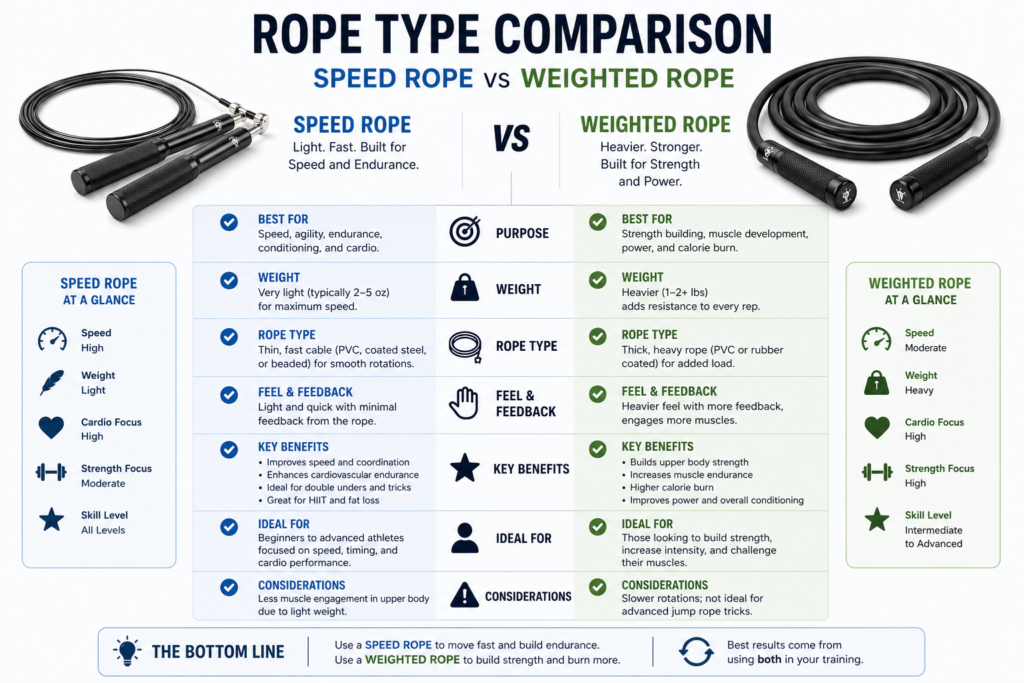
The distinction heavily relies on the type of equipment you use. When analyzing weighted vs speed ropes for muscle growth, a heavy rope (typically 1 to 2 lbs) provides actual resistance against your rotation. This stimulates the upper body and back muscles enough to trigger moderate muscle growth, whereas a thin wire speed rope focuses almost entirely on cardiovascular conditioning and footwork.
Beyond the Muscle: The Hidden Perks of the Rope
Understanding what muscles does jump rope work is just the beginning. The overall rope skipping muscles activated contribute to a highly functional, athletic physique.
- Bone Health: The repetitive, load-bearing impact of jumping on bone density is highly beneficial, helping to fortify your skeletal system and fend off osteoporosis over time.
- Heart Health: The cardiovascular benefits of daily skipping sessions cannot be overstated. It elevates your heart rate incredibly fast, improving lung capacity and stamina.
- Athleticism: It requires immense full body coordination for athletic performance, linking your brain to your hands and feet to improve agility, balance, and spatial awareness.
- Metabolic Boost: Skipping offers superior metabolic conditioning for functional fitness, creating an “afterburn” effect that continues burning calories long after you drop the rope.
Advanced Moves and Injury Prevention
Once you’ve mastered the basic bounce, you’ll likely want to explore advanced skills. When you perform complex, explosive movements, the stabilizing muscles used during double unders—particularly in your core, ankles, and shoulders—are heavily recruited. This takes your workout from a casual warm-up to a high-intensity interval training (HIIT) session.
However, high-impact plyometrics require proper care. Knowing the jump rope muscles means understanding the stress placed on your lower legs. You must focus on preventing shin splints while skipping by following these actionable tips:
- Wear the Right Shoes: Choose cross-training shoes with adequate forefoot cushioning and arch support.
- Jump on Soft Surfaces: Opt for rubber gym mats or wooden floors instead of harsh asphalt or concrete.
- Keep It Low: You only need to jump an inch or two off the ground to clear the rope. Bounding too high creates unnecessary joint impact.
- Stretch: Always stretch your calves and Achilles tendons after your workout to maintain flexibility.
The Ultimate Full-Body Tool
To summarize “what does jump rope target“, the answer is almost everything. It is a truly total-body endeavor. From the calves that launch you into the air to the forearms that swing the rope, your skipping muscles are always hard at work.
Whether your goal is to understand the jump rope muscles worked to build a more balanced workout routine, or to test if a heavier cable actually builds upper body strength, this classic exercise delivers incredible results. Grab a rope, brace your core, master your form, and experience the transformative, full-body benefits for yourself!